
Social Media Reputation Monitoring: A Practical Guide
A customer records a 40-second video outside one of your stores at 9 p.m. By 11 p.m. it has 30,000 views and 2,000 comments, some angry, some joking, a few in languages your social team does not speak. By 8 a.m. a news site has embedded it in a story, and your CEO hears about it from a board member over breakfast.
Nothing in that timeline is unusual anymore. What separates the organisations that come through it calmly from the ones that spend a week apologising is usually one thing: someone saw the post at 9:15 p.m. That is the job of social media reputation monitoring.
This guide explains what it covers, what to track, how the process works in practice, and why organisations that operate in more than one market need more than a single English-language dashboard. It is written for the people who carry the phone when things go wrong: communications heads, PR and brand managers, corporate affairs teams, and the executives they report to.
What is social media reputation monitoring?
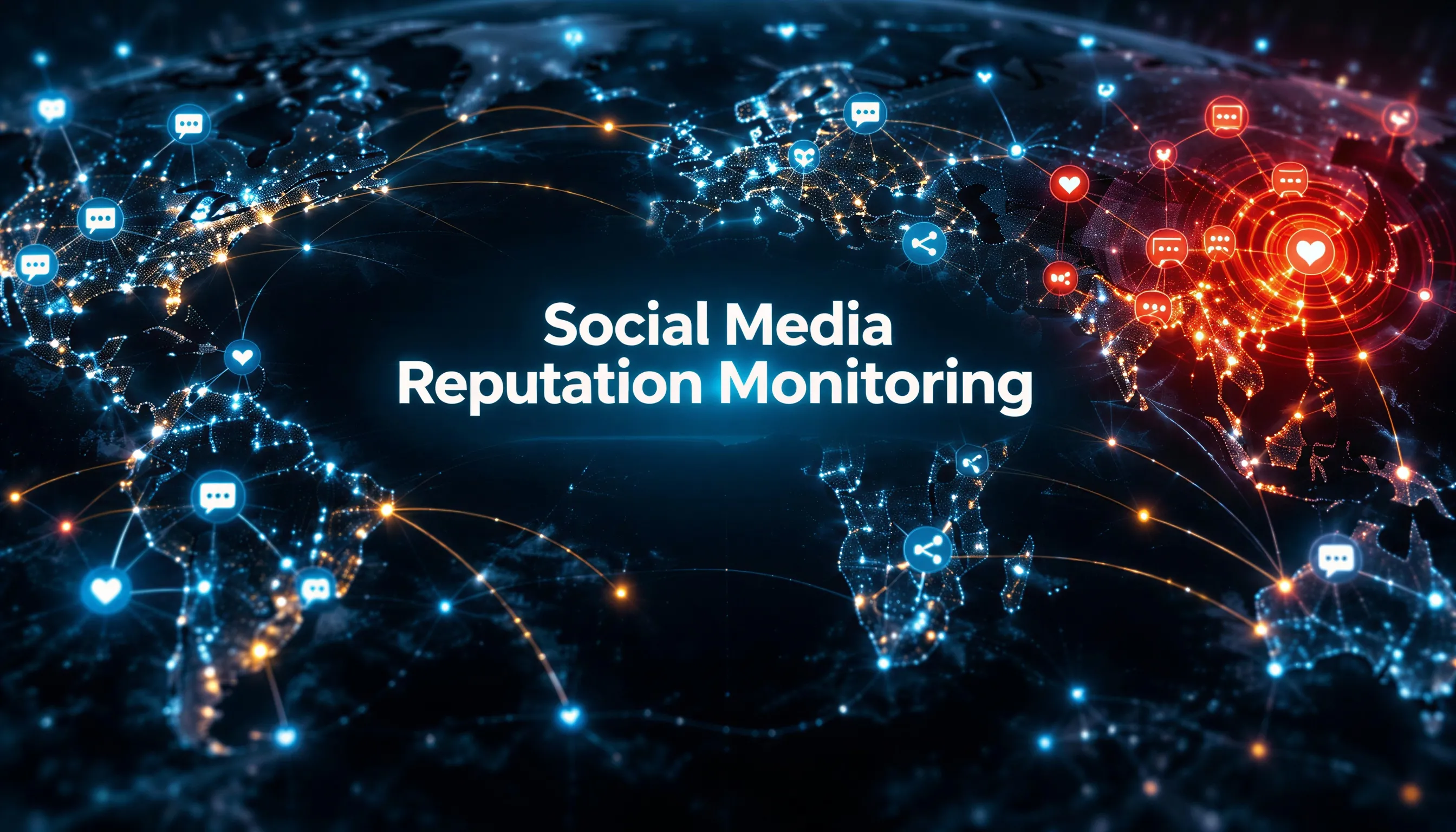
Social media reputation monitoring is the ongoing tracking of what people say about an organisation, its leaders and its products on social platforms, with the aim of spotting risks to trust early and responding before they spread.
It sits inside the broader practice of social media monitoring, but the focus is narrower. General social media monitoring might count mentions, measure campaign reach or report on engagement. Reputation monitoring asks a different question: is anything being said that could change how customers, regulators, investors, donors or the public see us?
That difference shapes everything else. A reputation team does not care much about a spike in likes. It cares a great deal about a single post from a former employee that is starting to get shared by accounts with large followings.
In practice, good reputation monitoring combines software that collects posts at scale with people who read them and decide what matters. At Ryans Archives, our social media listening and insights service works this way, with analysts reviewing what the system flags before an alert reaches a client.
Why it matters more than it did five years ago
Three things have changed.
Speed. A complaint used to travel by word of mouth, then by email. Now it travels by share button, and short video makes it travel faster still. Platforms reward content that provokes a reaction, and anger provokes reactions reliably.
The jump to news. Journalists watch social media closely. A post that gains traction in the evening can become a newspaper item, a TV segment or a headline by morning. Once that happens, the story stops being “some people online are upset” and becomes “there are reports that”. That shift is much harder to correct.
Permanence. Even when a post is deleted, screenshots survive. Old controversies resurface whenever a company is back in the news, during a product launch, a share listing or a leadership change.
For banks, listed companies and government bodies, there is a fourth factor: regulators and investors pay attention to public sentiment. A rumour about liquidity or a data leak, left unanswered for a day, can do real financial damage.
What you should actually track
A monitoring setup is only as good as its search terms. Most teams start too narrow and miss the conversations that matter. Here is a working list.
Brand, executive and product mentions
Track your organisation’s name in every form people actually use: the full name, the short name, abbreviations, common misspellings and local-language versions in each market you serve. Add your senior leaders, your main products or programmes, and any campaign slogans or hashtags. Many damaging posts never use the official name at all. They use a nickname, a product name or a photo of your logo.
Sentiment and tone shifts
Volume tells you that people are talking. Sentiment tells you how they feel. Watch for sudden changes in tone more than the overall average. A steady 70% positive score means little if negative comments tripled in the last two hours.
Be careful with automated scores. Software struggles with sarcasm, slang and posts that mix two languages in one sentence. “Great service, as always” with an eye-roll emoji will often be tagged as praise. This is why human review matters, and why our sentiment analysis work pairs automated tagging with analyst checks.
Competitors and your industry
Your own numbers mean more when you can compare them. If your bank is getting complaints about app downtime, are other banks getting the same complaints this week? If yes, it may be a sector issue such as a payment network outage. If no, it is your problem. Tracking peers also shows you how others handled similar situations, good and bad. See how this works in our competitor analysis use case.
Misinformation and fake accounts
Impersonation pages, fake customer support accounts and doctored screenshots are now routine. Some are scams aimed at your customers. Others are deliberate attempts to damage your name. Monitor for pages using your logo, accounts with names close to yours, and images of fake letters or notices on your letterhead. Spotting these early lets you report them to the platform and warn customers before people lose money.

How the monitoring process works
Whether you build it in-house or use a provider, the process follows five steps.
- Scope. Decide what you are protecting and from what. List the names, people, products and risk topics, such as safety, fraud, labour issues, pricing or political sensitivity. Agree who receives alerts and at what level of seriousness.
- Collect. Gather public posts, comments, videos and pages from the platforms where your audiences spend time. That differs by market and audience: Facebook, YouTube, TikTok, Instagram, X, LinkedIn and Reddit, plus public groups, forums, review sites and news comment sections.
- Filter. Remove noise. A brand named after a common word, a fruit or a place will pull in thousands of irrelevant posts unless the searches are tuned. This step takes the most time to get right and is where many tools disappoint.
- Analyse. Classify what is left by topic, sentiment, reach and risk. A complaint from an account with 200 followers is different from the same complaint shared by a well-known influencer or a journalist.
- Alert and report. Send urgent items to the right person immediately, through a channel they will see at midnight. Everything else goes into daily or weekly reports that show trends over time.
The reports matter as much as the alerts. Over a few months they show which issues keep coming back, which can tell a management team more about operational problems than any internal survey.
Social media monitoring vs. social listening
These terms are often used as if they mean the same thing. They overlap, but the emphasis differs.
|
|
Social media monitoring |
Social listening |
|
Main question |
What is being said about us right now? |
What do these conversations tell us over time? |
|
Time frame |
Real time, daily |
Weeks, months, quarters |
|
Typical output |
Alerts, mention lists, response queues |
Trend reports, insight decks, audience analysis |
|
Used by |
PR, customer care, crisis teams |
Strategy, marketing, research, leadership |
|
Reputation role |
Catch problems early |
Understand why perception is changing |
Reputation monitoring needs both. Monitoring catches the fire. Listening tells you why the building keeps catching fire.
Why a dashboard alone is not enough
Most monitoring software is good at collecting posts. Where it often falls short is in reading them correctly, especially for organisations that work across several countries.
Languages and spelling. Many people write online in informal spellings, abbreviations or a mix of languages. A search that only looks for the official spelling of your name misses a large part of the conversation, and sentiment models trained on formal English often score these posts wrongly.
Where conversations happen. Each market has its own habits. In one country the conversation sits on X and Reddit. In another it lives in Facebook groups and YouTube comments. A tool that is strong on one platform but weak on another gives a false sense of calm.
The crossover to traditional media. A viral post often moves into print, online news, TV and radio within hours. Monitoring social media alone shows only half the picture. Ryans Archives has tracked print, online, TV and radio coverage since 2000, so we can show clients when a social media story has crossed into the news, and how it is being reported.
Cultural and political context. Some topics are sensitive in ways an outside reviewer will not recognise: religious references, regional rivalries, labour issues, political timing around elections. Analysts who follow the local news in a market catch these signals far sooner than a keyword list.
This is why many international organisations, from embassies to development agencies to multinational brands, pair software with a team of human analysts. The software gives speed and scale. The analysts give judgement.
Who needs it most
Every organisation with a public face benefits, but some sectors carry more risk than others.
- Banks and financial institutions. Rumours about solvency, fraud or service failures can trigger real customer behaviour, such as withdrawals. Speed of detection matters more here than almost anywhere else.
- Publicly listed companies. Share prices react to sentiment. Investor relations and corporate affairs teams need to know what is circulating before analysts call.
- Multinational companies. Head offices need visibility in every market. A problem in one country can become a story in another, especially around labour, environment or product safety.
- Government organisations. Ministries and public bodies need to understand public reaction to policies and announcements, and to correct false information quickly.
- NGOs and development organisations. Donor trust depends on reputation. Allegations about misuse of funds or staff conduct need a fast, careful response.
- Consumer brands. Product complaints, quality issues and influencer controversies move fastest in consumer categories.
What to do when the alert comes
An alert is only useful if someone acts on it. A simple first-hour routine helps, especially at night or on a holiday.
- Confirm the facts. Is the post real? Is the claim true, partly true or false? Who posted it, and how fast is it spreading?
- Decide the level. Most negative posts need a normal customer-care reply, nothing more. A few need senior attention. Agree in advance what moves an item from one level to the next.
- Hold or respond. Sometimes a quick, human reply ends the matter. Sometimes it is better to wait an hour, gather facts and respond once, properly. Silence for a full day is almost never right.
- Watch the crossover. Check whether journalists or news sites have picked it up. Prepare a short holding statement in each language your key audiences use.
- Keep a record. Log what happened, when you knew, and what you did. This makes the post-incident review honest and useful.
Our crisis management support is built around this routine, with 24/7 alerts and analysts who can brief your team on what is spreading and where. Once the immediate pressure eases, the work turns to recovery: consistent posting, community replies and rebuilding trust, which is where social media management comes in.
Choosing a tool or a service
There are two main routes. Software tools give you a dashboard and leave the reading to your team. Managed services combine software with analysts who filter, classify and alert for you. Many organisations use both.
Whichever you choose, ask these questions before signing:
- Which platforms and sources are covered? Ask specifically about Facebook groups, YouTube and TikTok comments, review sites and news sites in each of your markets.
- How well does it handle the languages you need? Ask for a test on your own brand name using last month’s data.
- Who reviews the alerts? A system that sends every negative mention will be ignored within a week.
- How fast is an urgent alert? Get a number in minutes, not a promise.
- What do the reports look like? Ask for a sample. Check whether it explains what happened or just lists mentions.
- Can it connect to your PR measurement? Reputation data is more useful next to PR campaign performance data and news coverage.
Frequently asked questions
What is the difference between social media monitoring and reputation monitoring?
Social media monitoring tracks mentions and activity in general. Reputation monitoring focuses on the posts that could affect trust in your organisation, and on acting quickly when they appear.
How often should we check our social media reputation?
Continuously, with real-time alerts for serious issues and a daily or weekly summary for everything else. A monthly check is too slow for most risks.
Can free tools do the job?
Free tools are fine for a small business tracking its own name in one language. They rarely cover groups and video comments well, and they struggle with slang and mixed-language posts. Larger organisations usually need broader coverage and human review.
Does monitoring cover private messages or closed groups?
No. Ethical monitoring covers public content only. Private messages, closed groups and personal data are outside its scope, and any provider should be clear about this.

Start with a small, scoped pilot
You do not need a large contract to find out whether monitoring is worth it. Start with one brand, a handful of risk topics and a few weeks of data, and see what you would otherwise have missed.
Ryans Archives has monitored print, online, TV, radio and social media since 2000 and works with more than 500 clients across banking, telecoms, development, government and consumer sectors. If you want to see how your organisation looks from the outside, request a scoped pilot and our team will set it up within 48 hours.