

AI Media Monitoring: The Future of Automated Monitoring
Not long ago, media monitoring meant a team of people with scissors, highlighters and a stack of newspapers. Today, software can read thousands of pages before most of us finish breakfast. AI media monitoring has changed how fast an organisation can see what is being said about it, and automated monitoring has taken a lot of the repetitive work off communication teams.
But speed is only half the story. The harder questions are about accuracy, trust and judgment. What can software do well? Where does it get things wrong? And what will this work look like over the next few years?
This guide answers those questions in plain words. We will cover what AI media monitoring is, what it does well, where it still needs people, and where it is heading. We will also explain how Ryans Archives Limited combines AI assisted analysis with human quality checks for clients in Bangladesh and abroad.
What Is AI Media Monitoring?
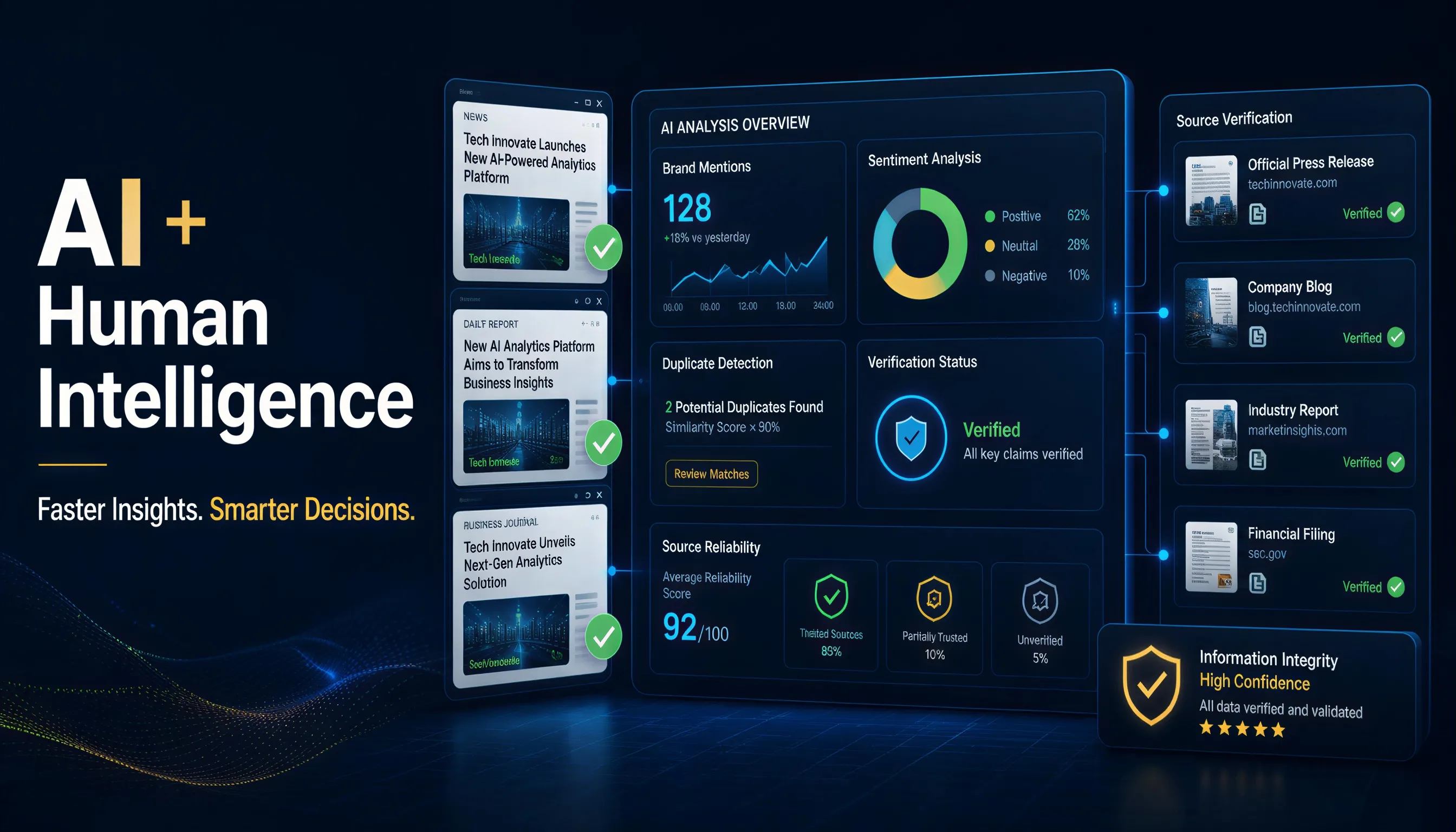
AI media monitoring uses machine learning and language models to read, sort and summarise coverage about your organisation. It follows print, online news, TV, radio and social platforms, and it turns a huge pile of mentions into something a person can act on.
The older method relied on keyword alerts. If a word matched, you got an email. That worked, but it created two problems. You received too many useless alerts, and you missed stories that described your company without using its exact name.
AI adds a layer of understanding. It can tell that "the telecom giant" in a paragraph refers to your brand, group similar stories together, and make a reasonable guess about whether the tone is positive, neutral or negative.
Keyword Alerts and AI: The Difference
A keyword alert asks one question: does this page contain my word? AI asks a better one: is this page about me, and does it matter?
That small change cuts noise. Instead of a hundred alerts where ninety are useless, your team gets a shorter list that is far more likely to deserve attention.
What Automated Monitoring Can Handle
Automated monitoring is the part of the work that software can do without a person touching it. In a good setup, that includes:
- Collecting coverage from thousands of sources
- Detecting the language of each item
- Matching mentions to your brand, people and products
- Grouping copies of the same story together
- Tagging topics and scoring tone
- Drafting short summaries
- Sending alerts to the right person
- Building regular reports
This removes the slow, repetitive part of the job. It does not remove the need for judgment, and we will come to that shortly.
What AI Already Does Well
Speed and Scale
No team of people can read every portal, paper and social post in a day. Software can. It scans continuously, so a story that goes live at 2 a.m. can reach your phone within minutes, not at the next morning meeting.
Language and Tone
Modern tools can detect whether a post is in Bangla or English and give a first estimate of tone. That helps teams sort a large volume of mentions quickly and see at a glance whether the mood is turning.
Grouping and Pattern Spotting
One news item often appears on ten websites with small changes. AI can group these as one story, so your report shows one story with ten appearances instead of ten separate stories.
It can also notice patterns that are hard to see by eye: a sudden jump in mentions, a new topic linked to your name, or the same complaint repeated in different places. Those patterns are often the first sign that a story is growing.
Short Summaries
Busy leaders do not want to read forty articles. AI can draft a short summary of each one, which saves a great deal of reading time. As we will see below, those summaries need a human check before they reach a decision maker.
Where AI Still Falls Short
AI is useful, but it is not magic. Anyone selling AI media monitoring as a perfect system is not being honest. Here are the places where it still slips.
Sarcasm and irony. A headline that sounds negative can sit above a positive story, and a polite sounding comment can carry a sharp meaning. Software often reads the surface and misses the point.
Local language complexity. Bangla has regional dialects, many spelling variations, and a very common habit of writing Bangla in English letters on social media. Tools trained mostly on English handle these badly.
False matches. If your brand name is also a common word, AI can bring in many mentions that have nothing to do with you.
Made up details. Language models can write summaries that sound confident but include a detail the article never stated. This is a known weakness, and it is one reason summaries should be checked against the original.
Missing context. AI cannot know that a small complaint matters more this week because your annual meeting is tomorrow, or because the same issue is already with a regulator.
None of this is a reason to avoid AI. It is a reason to use it with care.
Why Human Review Still Matters
The best monitoring services treat AI as a fast first reader and people as the final judges. In practice, that means trained analysts do the following:
- Remove false matches before they reach you
- Decide which items are urgent and which can wait
- Check summaries against the original article
- Add local and industry context
- Correct tone scores when the software gets them wrong
There is also a question of responsibility. When a story reaches your CEO or board, someone should be able to say that a person checked it. A score from a machine is a guide. It is not a signature.
Experience matters here. Ryans Archives has been working with media coverage since 2000, long before AI tools became common. That history is what helps our analysts spot when software has read a story the wrong way.
Where AI Media Monitoring Is Heading
No one can predict this exactly. But based on where the tools are going, these directions look likely.
Earlier Warnings
Most monitoring today tells you what has already been published. The next step is flagging what may grow. A sudden rise in mentions, a story picked up by more and more outlets, or a complaint that keeps repeating can all be signs of a coming problem. AI will get better at pointing to these signs early, though a person will still decide what to do about them.
Better Handling of Video and Audio
A large part of the news still reaches people through TV and radio. Speech recognition is improving, which means broadcasts can be turned into searchable text faster and more accurately. For organisations in Bangladesh, the real test is how well tools handle Bangla speech, accents and mixed language talk shows. Progress is real, but human checks stay important.
Asking Questions in Plain Words
Dashboards are slowly changing from screens full of charts to tools you can talk to. Soon it will be normal to type, "What did the press say about our new branch this week?" and get a short answer with links to the sources. The links matter. A good tool should always show you where an answer came from, so you can check it yourself.
Spotting Fake and Edited Content
False press notes, doctored images and deepfake videos are a growing risk for banks, public bodies and well known brands. Tools that flag suspicious content will help. But a flag is not a verdict. Confirming that something is fake, and deciding how to reply, still needs people and official sources.
Better Understanding of Many Languages
Tools are getting better at mixed language posts and local expressions. This is one of the most useful areas of progress, especially for markets like Bangladesh. It is still not solved, so providers who cover Bangla natively will keep an edge over those who translate everything into English first.
Clearer Explanations
Organisations will increasingly ask a simple question: why did the system mark this as negative, or urgent? Providers who can explain their results and show the source will earn more trust than those who only show a score.
What This Means for Different Teams
Banks and financial institutions. False rumours spread fast and cause real worry. Early alerts and a clean record help you answer with facts and show regulators what you saw and when.
Telecom companies. Complaint volume is huge. AI helps sort real service problems from ordinary noise, so your team looks at the stories that matter first.
Government organisations and NGOs. You need to know how policies and projects are being received. AI makes it easier to track public opinion across many outlets, and human review keeps the reports fair and accurate.
Listed companies and multinationals. You deal with many countries and languages. Automated monitoring keeps coverage consistent across them, so one team does not have to read everything by hand.
Crisis management teams. The first hour of a story decides a lot. Faster alerts give you time to prepare a calm, factual reply.
PR and brand teams. You can show clearly what your campaigns achieved, which messages worked and how you compare with competitors.
Risks and Rules to Watch
Good AI tools come with responsibilities. Before you sign with any provider, think about these points.
Data security. Monitoring reports can include sensitive information. Ask where data is stored and who can see it.
Bias and gaps. A system trained on limited data may misread local language or ignore smaller outlets. Ask which sources and languages are actually covered.
Over trust. A tone score is an estimate. Treat it as a hint, then read the story.
Big claims. If a vendor promises perfect accuracy, be careful. Ask for sample reports and a trial on your own topics.
Your own rules. Banks, public bodies and listed companies have their own compliance duties. Make sure your provider can support them.
How Ryans Archives Combines AI and People
Ryans Archives Limited has provided media intelligence since 2000. Our team captures and analyses coverage across print, online news, TV, radio and social media. We combine AI assisted analysis with human quality checks on every deliverable, so you get the speed of software and the judgment of experienced analysts.
Priority Alerts in Near Real Time
Priority and crisis level mentions are pushed to you in near real time, typically within minutes of publication or broadcast. Routine coverage arrives on the schedule you choose: hourly, daily or weekly.
Our News Coverage & Insights service tracks print, broadcast and online news across Bangladesh and turns it into clear briefs.
Social Media Listening
Many stories start on social platforms before they reach the news. Our Social Media Listening service follows brand, competitor and industry conversations, so you see the early signs.
Bangla and English
We monitor Bangla and English natively and support other languages on request. If you need summaries or transcripts of TV and radio content, our Synopsis, Translation & Transcription service can help.
Sentiment and Competitor Benchmarking
Every mention is scored for tone using a mix of AI classification and human review. We also compare your coverage with the competitors you name, so you can see where you stand.
PR and Advertising Measurement
Our PR Campaign Performance service measures the real reach and impact of campaigns against your goals. Our Advertisement Tracking service checks where and when your ads ran across TV, print and digital.
Reports in Your Format
Reports come as email alerts, Excel, Google Sheets, Word, Google Docs, PDF, PowerPoint, Google Slides, live dashboards and more. You choose the format and the schedule.
A Searchable Archive
Our Historical Data & Digital Archiving service builds searchable archives, so a story from years ago can be found in seconds.
Who We Work With
Organisations across banking, telecom, energy, development, electronics and government use our services. Clients who have shared reviews on our website include Chevron Bangladesh, Banglalink, IFIC Bank, BRAC, Singer Bangladesh and Walton Hi Tech Industries.
Talk to our team about AI media monitoring
How to Choose an AI Media Monitoring Provider
Many vendors now use the word AI. These questions help you see what is behind it.
- Where does the AI stop and the human start? Ask who checks the results before they reach you.
- Which sources and languages do you cover? Ask for a sample list, including Bangla sources.
- How do you handle false matches? Test this with your own brand name.
- Can I see the source behind every summary and score? You should always be able to check the original.
- How fast are priority alerts? Ask for typical delays, not the best case.
- How is my data stored and protected? Ask about access controls and contracts.
- Can I choose the report format and schedule? Your board, PR team and compliance team need different views.
- Can you show real examples? Ask for sample reports and references from similar organisations.
Ask for a demo, and judge it using a real topic from your own business.
Common Mistakes to Avoid
Trusting the score without reading the story. Tone scores are estimates. Read the article before you act on them.
Believing that AI replaces people. It speeds up the work. It does not replace judgment.
Ignoring local language. If your tool cannot read Bangla well, you will miss a large part of the conversation.
Buying on buzzwords. A shiny demo is not proof. Test the service with your own topics.
Setting it up once and forgetting it. Your products, people and competitors change. Review your keywords every quarter.
No response plan. The best alert in the world is useless if nobody knows what to do with it.
A Simple Way to Start
You do not need a long project. Four steps are enough.
- Decide the purpose. Are you protecting reputation, preparing for crises, tracking competitors or keeping records for compliance? Write down your top three goals.
- List your keywords. Include your brand, spelling variations, Bangla names, products, leaders, competitors and risk words such as recall, fraud, outage or lawsuit.
- Set the alert rules. Decide who receives priority alerts and who receives the daily or weekly brief.
- Run a test. Check the first reports against what you already know, tell your provider what was useful and what was noise, and review again after one month.
With Ryans Archives, you share your brand name, competitor list, target markets and preferred schedule. We reply within one business day with a scoped proposal, and most clients start receiving reports within about a week.
FAQs
What is AI media monitoring?
It is the use of artificial intelligence to read, sort and summarise news and social media coverage about your organisation, so your team can focus on the stories that matter.
What is automated monitoring?
It is the part of media monitoring that software handles on its own, such as collecting coverage, matching mentions, grouping duplicates, scoring tone and sending alerts.
Can AI replace human analysts?
No. AI is fast, but it can misread sarcasm, local language and context. The best results come from AI doing the first pass and trained analysts checking the output.
How accurate is AI sentiment analysis?
It is a useful guide, but not perfect. Accuracy varies by language, topic and tool, which is why human review matters, especially for Bangla content.
Does Ryans Archives use AI?
Yes. We combine AI assisted analysis with human quality checks on every deliverable, and we score tone using a mix of AI classification and human review.
How fast are alerts?
Priority and crisis level mentions are pushed in near real time, typically within minutes of publication or broadcast. Other coverage arrives hourly, daily or weekly.
Can you monitor Bangla content?
Yes. We monitor Bangla and English natively and support other languages on request.
How do I get started?
Send us your brand name, competitor list, target markets and reporting schedule through our contact page. You can also call +88 01755 513 979 or email archives@ryans.com.
The Bottom Line
AI media monitoring is changing how organisations listen to the news. It is faster, it handles more sources and it cuts a lot of noise. Over the next few years, it will give earlier warnings, handle video and audio better and let teams ask questions in plain words.
But the strongest setups will not be fully automated. They will be a partnership: software for speed and scale, and experienced people for context, judgment and accountability. Choose a provider that is honest about both sides, covers the languages your audience speaks and shows you the source behind every result.
Ryans Archives has been doing this since 2000, and we use AI the way a careful team should: as a fast first reader, with people making the final call. If you want to see how that looks for your organisation, request a demo and we will show you.